

Federal Budget Threats to Arts Education: What Proposed 27% Title I Cuts Mean for Theatre Programs

The numbers are staggering, and they should terrify every theatre educator in America. A proposed 27% cut to Title I funding: that's $5.2 billion slashed from schools serving our most vulnerable students. But here's what's even more alarming: this is just the beginning of a coordinated attack on arts education that threatens to dismantle decades of progress in getting theatre into schools.
As someone who's spent years fighting for theatre education, I can tell you that what we're facing isn't just budget cuts: it's a fundamental reshaping of what we believe education should be. And theatre programs? We're not just collateral damage. We're the target.
The Scope of the Assault
Let's get real about what's actually being proposed here. The Trump administration's FY 2026 budget doesn't just trim around the edges: it takes a sledgehammer to arts education funding. We're looking at a $4.535 billion reduction to K-12 education overall, with the Department of Education facing a $12 billion cut.
But here's the kicker: the Assistance for Arts Education program? Gone. Completely eliminated. That's $36.5 million that currently supports arts education across the country: money that's already being pulled from schools as we speak. Nine out of 22 schools that received five-year grants in 2021 have already gotten their cancellation notices.
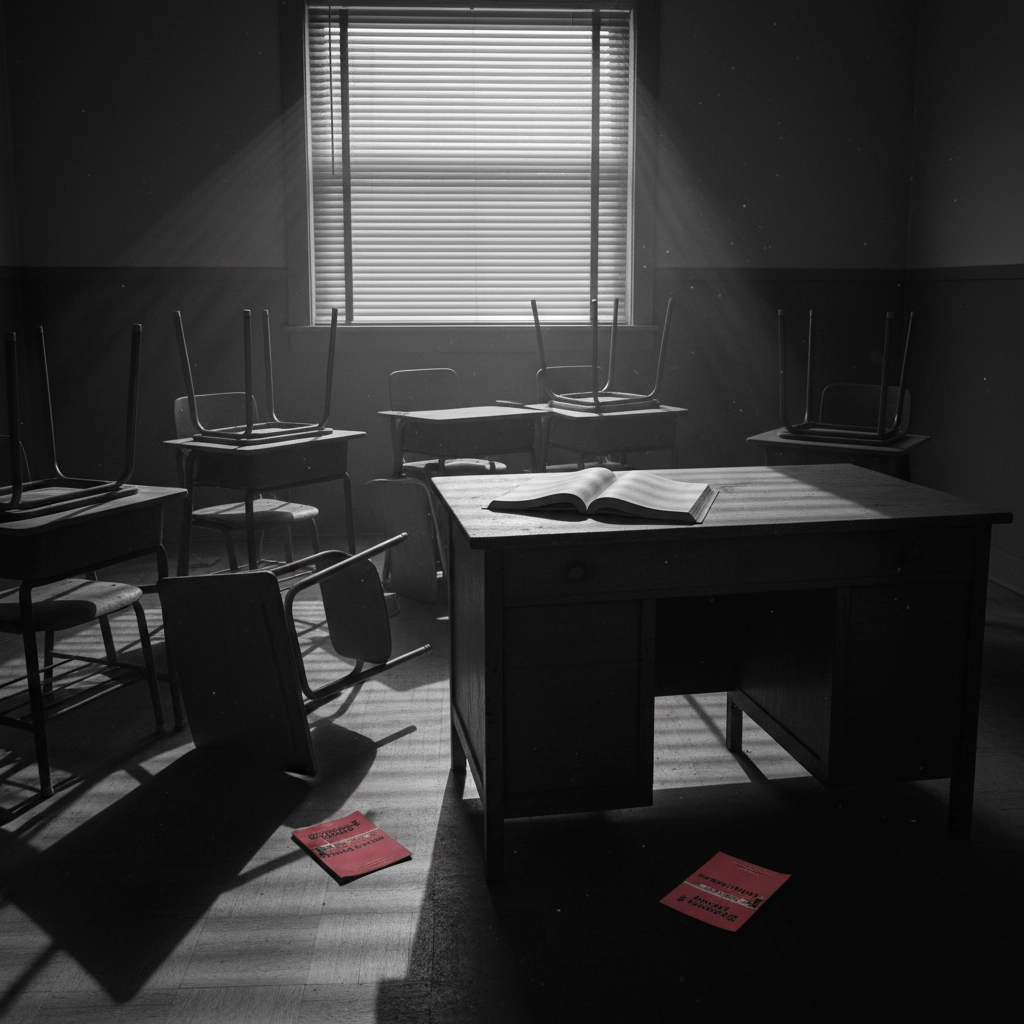
Think about that for a moment. Schools that planned their programming, hired teachers, and made commitments to students based on federal funding are suddenly left scrambling. It's not just irresponsible: it's cruel.
Why Title I Cuts Hit Theatre Programs the Hardest
Here's something most people don't understand about Title I funding: while it's technically designated for "core academics" in schools with high numbers of low-income students, it creates the foundation that makes everything else possible. When you gut that foundation by 27%, the ripple effects are immediate and devastating.
Schools serving economically disadvantaged students already operate on razor-thin margins. They're the ones most likely to see theatre as "optional" when budgets get tight. And let's be honest: when administrators are forced to choose between keeping the lights on and funding the spring musical, guess what gets cut?
But here's what those decision-makers are missing: theatre isn't just an "extra." For many students in Title I schools, it's the thing that keeps them coming to school. It's their safe space, their community, their path to college scholarships. When we eliminate theatre programs, we're not just cutting an activity: we're cutting lifelines.
The Domino Effect on Theatre Programming
The proposed elimination of Title IV-A and the zeroing out of Title II funding creates an even bigger crisis. These programs frequently supported after-school and community-based theatre initiatives: the kind of programming that gives kids opportunities they'd never have otherwise.
I've seen what happens when this funding disappears. Schools that used to produce three shows a year are down to one. Drama teachers who used to run after-school programs are told there's no money for stipends. Theatre programs that once toured to elementary schools to build audiences are grounded indefinitely.

And here's the most insidious part: the messaging around these cuts. They're being framed as prioritizing "core" subjects like reading, writing, and math. As if theatre doesn't teach all of those things. As if the student who struggles with traditional literacy doesn't come alive when they're memorizing lines. As if the math-phobic kid doesn't master fractions when they're calculating lighting angles.
The Perfect Storm: Budget Cuts Meet Censorship
But wait: it gets worse. While funding is being slashed, theatre programs are also facing unprecedented censorship pressures. We're dealing with a perfect storm: less money to operate and more restrictions on what we can produce.
Schools are already walking on eggshells about show selection. Add financial desperation to that mix, and you've got programs that will choose the safest, most vanilla content possible just to survive. That's not theatre education: that's theatre fear.
The clinical professor of educational theater at NYU put it perfectly: the current political climate raises the stakes every time a school makes a production choice. When your funding is hanging by a thread, taking any kind of artistic risk becomes nearly impossible.
Real-World Casualties
This isn't theoretical. The Pennsylvania Academy of the Fine Arts has already announced closures of arts training programs. The Denver School of the Arts saw faculty walkouts over proposed layoffs. Across the country, theatre educators are being forced to make impossible choices.

But here's what really breaks my heart: the students who will never get the chance. The kid in rural Mississippi who might have discovered their calling through community theatre partnerships: except that program just lost its federal funding. The English language learner in East LA who might have found their voice through drama therapy: except their school can't afford the specialist anymore.
These aren't just statistics. They're dreams deferred, talents undiscovered, communities left poorer.
The Economic Argument They Don't Want You to Know
Want to know the really infuriating part? The creative industries contribute $1.2 trillion to the American economy annually. Theatre, film, television, digital media: these aren't hobbies. They're major economic drivers that employ millions of Americans.
Yet we're dedicating only 3.2% of our education budget to the arts. And now they want to cut even that. It's like deciding to eliminate driver's education while complaining that nobody knows how to drive.
Every theatre program we lose is a pipeline to that $1.2 trillion industry that we're choosing to close. Every drama teacher laid off is expertise walking out the door. Every spring musical cancelled is a dozen kids who might have found their path to college through theatre scholarships.
What Theatre Educators Can Do Now
Look, I'm not going to sugarcoat this: we're facing an uphill battle. But here's what I know about theatre people: we don't give up. We improvise. We find ways to tell the stories that need telling, even when the circumstances are impossible.
First, get organized. Rep. Sydney Kamlager-Dove and colleagues reintroduced the Equitable Arts Education Enhancement Act specifically to counter these cuts. Your voice matters: contact your representatives and tell them what arts education means in your community.

Second, build local partnerships. If federal funding is unreliable, we need to strengthen community connections. Local businesses, parent groups, alumni networks: these relationships can provide stability when Washington fails us.
Third, document everything. Every success story, every scholarship earned, every life changed through theatre. We need data to fight back against the narrative that arts education is expendable.
The Senate Stands Between Us and Disaster
There's still hope. While the House wants to eliminate arts education funding entirely, the Senate version maintains the AAE program, albeit at a reduced level: $32 million instead of $37 million. It's not perfect, but it's a lifeline.
The difference between these two approaches isn't just about money: it's about values. It's about whether we believe all students deserve access to the transformative power of theatre, or whether we're content to let arts education become a luxury for the wealthy.
Fighting for Our Future
Here's what I need every theatre educator reading this to understand: this fight is bigger than any single program or budget cycle. This is about the soul of American education. This is about whether we're going to raise a generation that values creativity, empathy, and artistic expression, or whether we're going to surrender to a narrow vision of education that reduces children to test scores.
Theatre taught me that every story matters. Every voice deserves to be heard. Every student: regardless of zip code or family income: should have access to the magic of live performance.

The proposed cuts would take that magic away from the students who need it most. We can't let that happen. Not on our watch.
If you're feeling overwhelmed by the scope of these challenges, if you need strategies for advocating in your community, or if you want to connect with other educators fighting the same battles, let's talk. Because the one thing I know for certain is this: we're stronger when we stand together.
Ready to join the fight for theatre education? Let's connect and figure out how to turn this crisis into a catalyst for change.
The curtain doesn't have to fall on arts education. But only if we refuse to let it.
Comments