

Why 92% of Americans Support Arts Education but Only 52% Say Their Kids Actually Get It
- Anthony Cimino-Johnson
- Nov 17, 2025
- 5 min read

There's a troubling disconnect happening in American education, and it's time we talked about it. While an overwhelming 92% of Americans believe every student should have access to quality arts education, only 52% think their kids actually have sufficient opportunities to take art classes. That's a 40-percentage-point gap between what we value and what we're delivering: and it's getting wider every year.
As someone who's spent decades in theatre education, I've seen this gap play out in real time. I've watched passionate teachers fight for programs that communities claim to support, only to see those same programs cut when budgets get tight. The question isn't whether Americans value the arts: clearly, we do. The question is why we keep failing to act on those values.
The Numbers Don't Lie
Let's start with what the data tells us. The statistics paint a picture that should make every parent, educator, and school board member take notice:
92% of Americans believe every student should have access to quality arts education
Only 52% think students actually have sufficient opportunities
Just 51% believe everyone in their community has equal access to the arts
80% of Americans agree that arts education isn't valued like it used to be
71% of parents report their children have less access to arts in school due to budget cuts
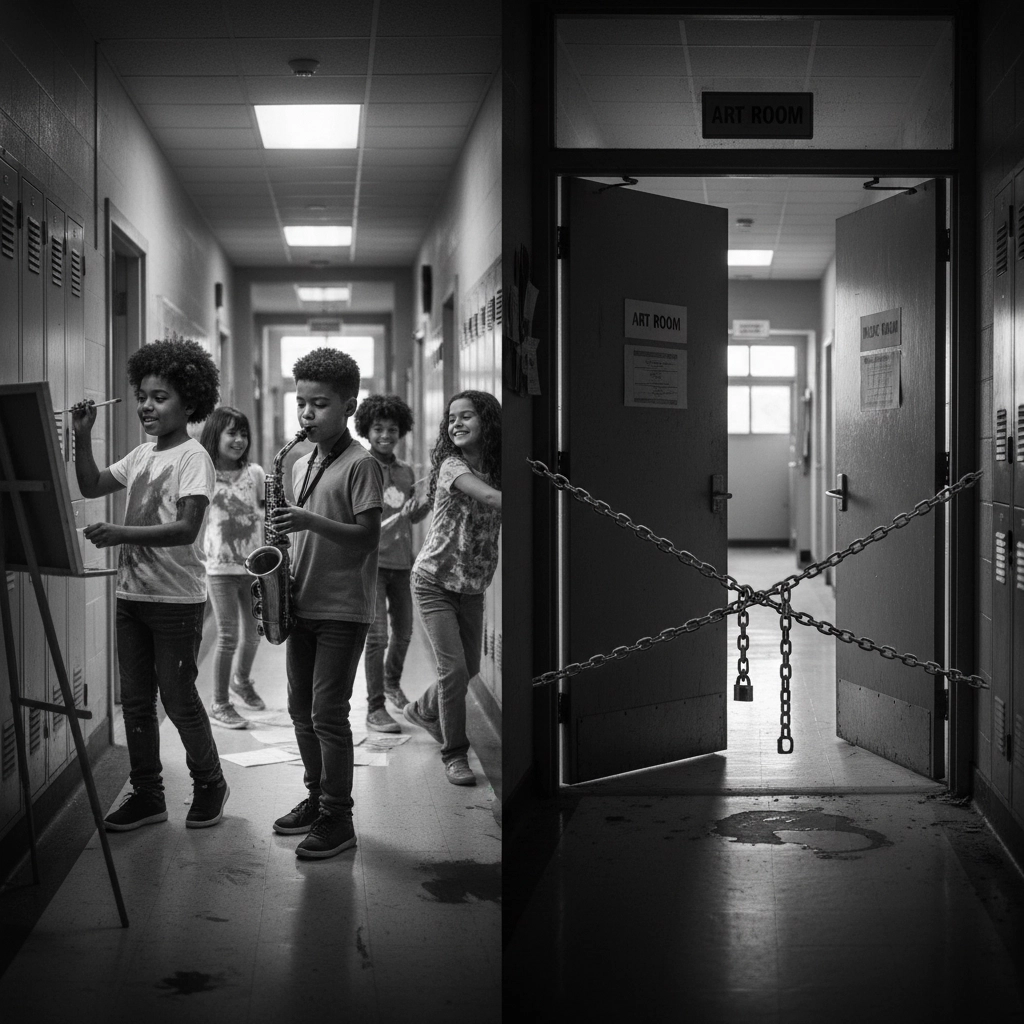
But here's where it gets really stark: students now spend an average of just 33 hours in arts-based instruction by high school, down from 300 hours in elementary school. We're literally watching arts education disappear as kids get older, right when they need creative outlets the most.
The Great Contradiction
Here's the part that keeps me up at night: 70% of adults agree that arts help students perform better academically, and 83% of employed workers say creativity is important for career success. We know arts education works. We know creativity matters. Yet when push comes to shove, we consistently underfund and undervalue these programs.
This isn't just about singing and dancing, folks. This is about critical thinking, problem-solving, collaboration, and emotional intelligence: skills every employer says they desperately need. The very skills that will help our kids thrive in an AI-driven economy where creativity becomes our competitive advantage.
Where the System Breaks Down
Budget Cuts Hit Arts First
When schools face financial pressure, arts programs become easy targets. They're seen as "extras" rather than essentials. I've sat in too many meetings where administrators who publicly champion arts education privately explain why they have to cut them. The math seems simple: reading, writing, and arithmetic feel more urgent than rhythm, rhyme, and rehearsal.
But that math is wrong. Dead wrong.
The Elementary Cliff
Arts education is mandatory in roughly 79% of elementary schools, but that drops dramatically in middle school. By high school, arts become electives that compete with AP classes, sports, and college prep courses. We've created a system where the older students get, the less access they have to creative expression.
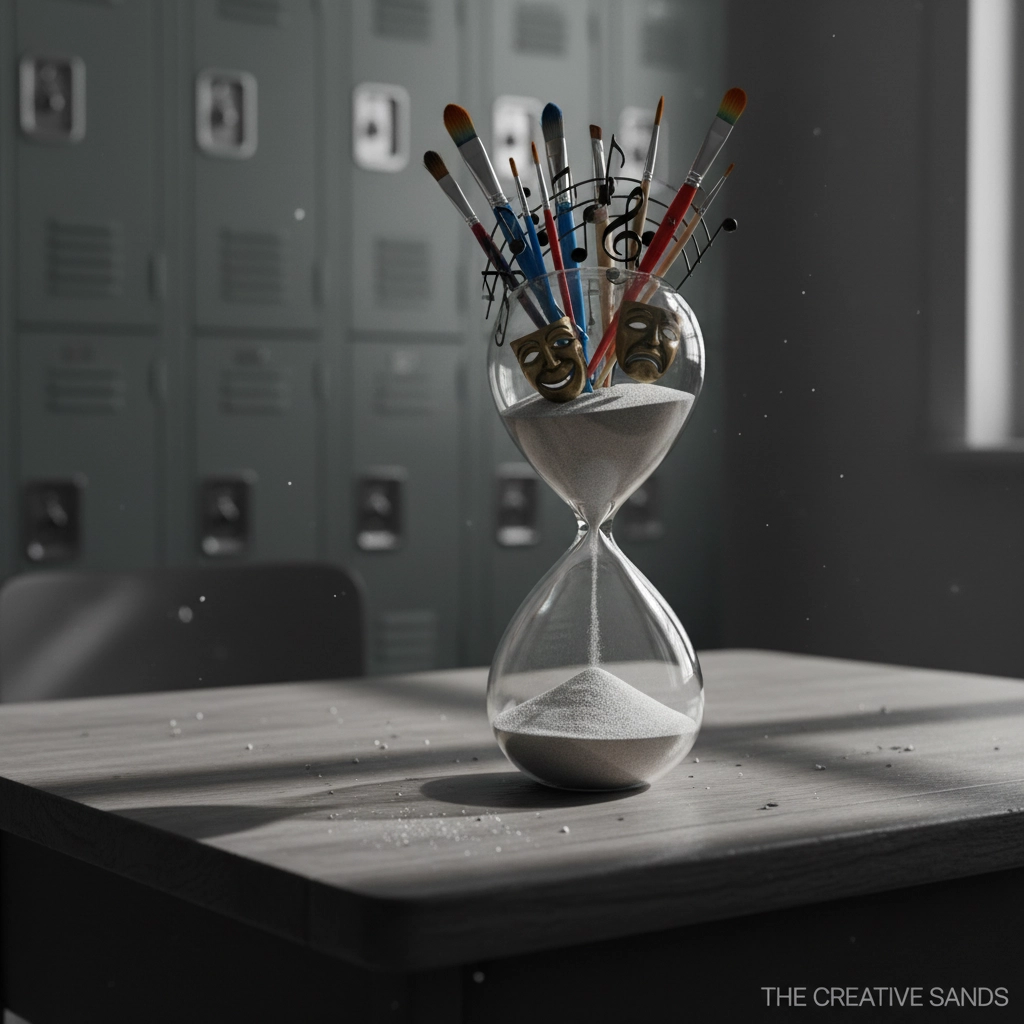
The Testing Trap
Standardized testing has pushed schools toward narrow definitions of success. When your school's rating depends on math and reading scores, it's tempting to focus resources there. But what we're discovering is that students with strong arts backgrounds often perform better on those very tests we're so worried about.
The Real Cost of This Gap
Lost Potential
Every time we cut an arts program, we're not just losing a class: we're losing potential. The kid who discovers confidence through theatre. The student who finds their voice through music. The young person who learns to see the world differently through visual arts. These aren't luxuries; they're necessities for developing whole human beings.
Economic Impact
Let's talk dollars and cents, since that's the language budget committees understand. The arts contribute over $1.2 trillion to the U.S. economy annually. Creative industries are growing faster than the overall economy. Yet we're systematically reducing our pipeline of creative talent.
Equity Issues
The gap between support and access hits hardest in underserved communities. Schools with fewer resources are more likely to cut arts programs, creating a two-tiered system where wealthy districts maintain robust offerings while others struggle. This isn't just unfair: it's economically shortsighted.
Fighting Back: What's Working
Despite these challenges, I'm seeing inspiring examples of educators, parents, and communities who refuse to accept this status quo.
Community Partnerships
Smart districts are partnering with local arts organizations, businesses, and community groups to supplement school programs. These partnerships bring professional artists into schools, provide equipment and spaces, and create pathways for students to engage with arts beyond school hours.
Creative Funding Solutions
Progressive educators are getting creative with funding. Grant writing, corporate sponsorships, crowdfunding campaigns, and community fundraisers are helping fill gaps. Some districts are also partnering with higher education institutions to share resources and expertise.
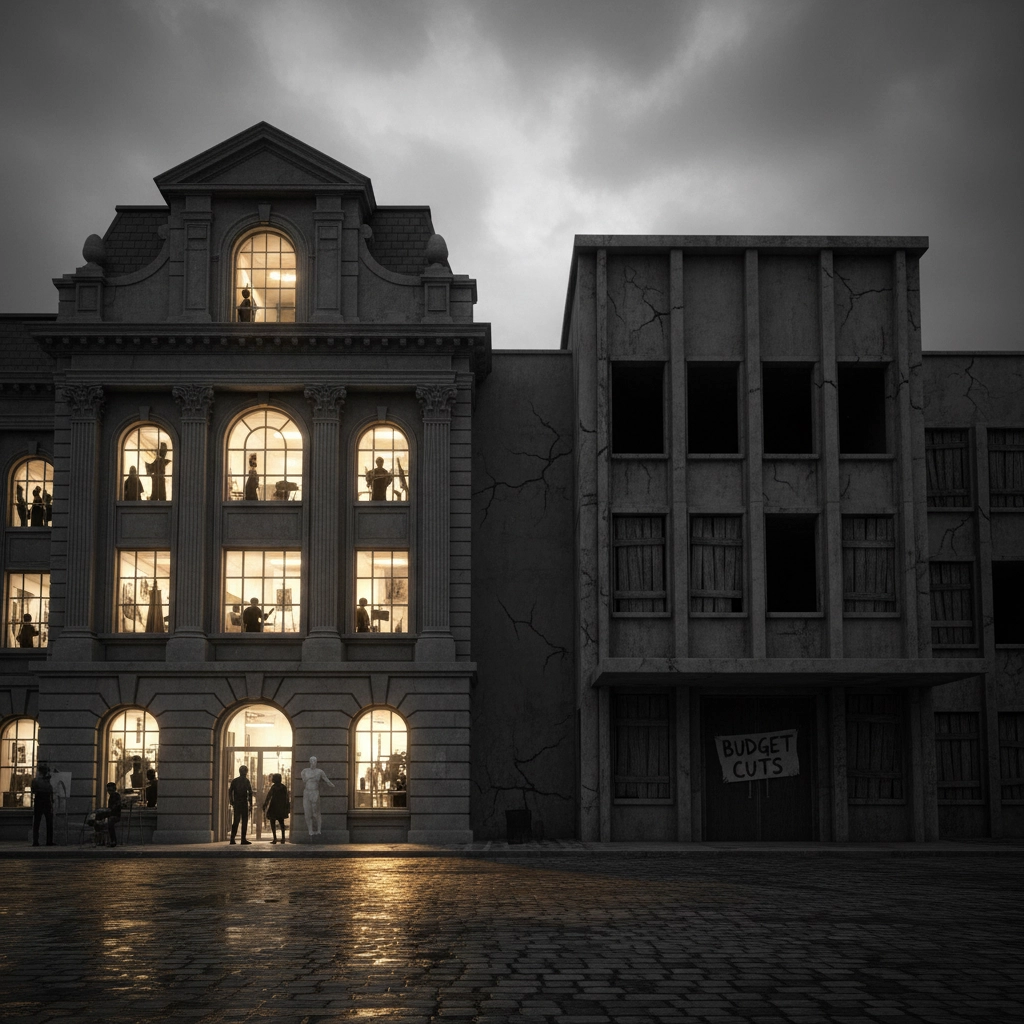
Integration Strategies
The most successful programs are integrating arts across the curriculum rather than treating them as separate subjects. When history comes alive through historical theatre, when math concepts are explored through music theory, and when science is investigated through art projects, the artificial barriers between "core" and "elective" subjects start to dissolve.
The Path Forward
Advocacy That Works
We need to get smarter about how we advocate for arts education. Instead of just talking about creativity and self-expression (though those matter), we need to lead with the economic arguments, the academic achievement data, and the workforce development benefits. School boards respond to evidence, so let's give them evidence they can't ignore.
Reframing the Conversation
Arts education isn't separate from academic achievement: it's integral to it. The same skills that help a student analyze a character's motivation in a play help them understand historical figures in social studies. The discipline required for musical practice builds the same neural pathways needed for mathematical problem-solving.
Building Coalitions
Parents, educators, students, and community members need to work together. When a school board sees a packed meeting with teachers, parents, local business leaders, and students all speaking with one voice about arts education, they pay attention.
Your Role in Closing the Gap
If you're reading this and thinking "This is important, but what can I do?": you have more power than you realize.
For Parents: Ask your school what arts offerings are available. Attend school board meetings. Volunteer to help with productions or fundraisers. Your voice matters.
For Educators: Document the impact of your programs. Collect data on student achievement, engagement, and post-graduation outcomes. Share success stories. Build relationships with administrators who can champion your cause.
For Community Members: Support local school arts programs through donations, attendance, and advocacy. Consider partnering your business or organization with schools to provide resources or opportunities.
The Bottom Line
The gap between supporting arts education in principle and providing it in practice is a choice. Every time we say "We believe in arts education, but..." we're making a choice about what kind of education: and what kind of future: we want for our kids.
The 92% of Americans who support arts education have the power to close this gap. We just need to act on our values instead of just talking about them.
Because here's the truth: in a world where artificial intelligence can write reports, solve equations, and even compose music, the uniquely human skills: creativity, emotional intelligence, collaboration, and critical thinking: become more valuable, not less. Arts education isn't preparing kids for yesterday's economy; it's preparing them for tomorrow's.
The question isn't whether we can afford to invest in arts education. It's whether we can afford not to.
Ready to be part of the solution? The conversation starts now, and it starts with you. Let's turn that 52% into 92%: because our kids deserve an education that matches our values, not one that falls short of them.
Comments